
If you live in Atlanta or anywhere in Georgia and your neighborhood has a retention pond, that pond is not just decoration. It controls stormwater, protects your home from flooding, and helps prevent water pollution from reaching local creeks and rivers.
Many homeowners do not realize they share responsibility for keeping these ponds working properly. In this guide, we will walk you through the 7 most important rules every homeowner should know.
We will explain what they mean, why they matter in Georgia’s climate, and what you should do to stay compliant and protect your property.
For reliable retention pond maintenance in Atlanta, contact Aquatic Restoration today (770-592-5099, 678-949-3973) and schedule a professional inspection before small issues turn into costly repairs.
Why Retention Ponds Matter in Georgia
Before we get into the rules, it helps to understand why these ponds exist.
Atlanta and much of Georgia receive significant annual rainfall. According to NOAA climate data, Atlanta averages around 50 inches of rain per year. In heavy storms, especially during hurricane season or strong summer thunderstorms, water can accumulate quickly.
When land is developed with roads, roofs, and parking lots, rainwater cannot soak into the ground like it used to. Instead, it runs off quickly. That runoff carries oil, fertilizer, dirt, trash, and other pollutants into storm drains. Without control, this can cause:
Flash flooding
Erosion of nearby streams
Property damage
Water pollution in rivers such as the Chattahoochee
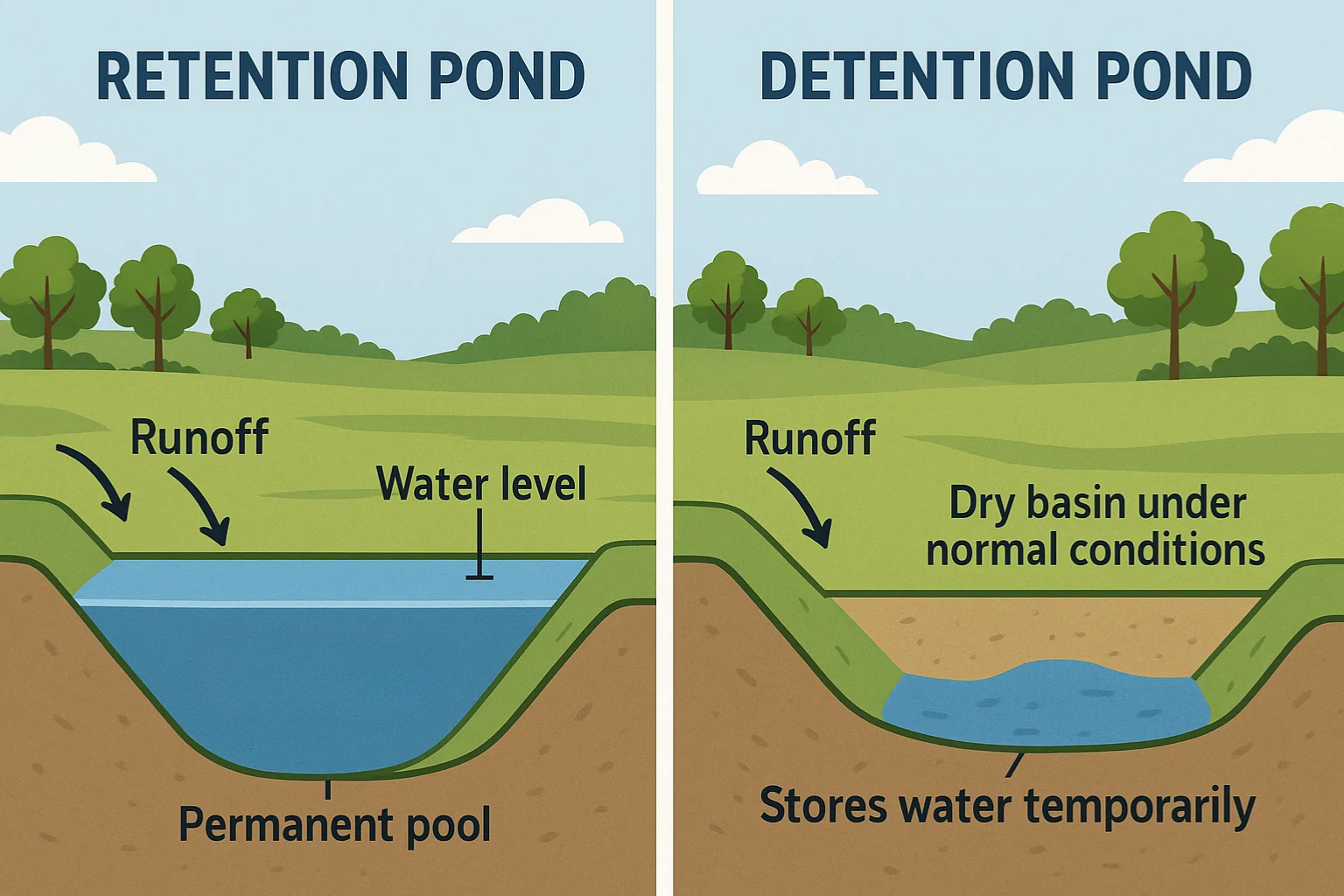
A retention pond holds stormwater and releases it slowly through a controlled outlet structure. This reduces flooding risk and allows sediment and pollutants to settle before water flows downstream.
Now, let’s go through the seven rules every homeowner should understand.
Rule 1 - Know Who Owns and Maintains the Pond
Who Is Responsible for a Retention Pond in Georgia?
In most Georgia subdivisions, the homeowners' association - HOA - is responsible for maintaining the retention pond. In some cases, especially in older neighborhoods or commercial areas, the responsibility may fall on:
A property owner
A developer
A local government entity
You should never assume the city maintains your pond. In many metro Atlanta counties, including Fulton, Gwinnett, Cobb, and DeKalb, stormwater systems inside private communities are the responsibility of the property owners or HOA.
What You Should Do
Review your HOA documents
Check your subdivision plat or county records
Ask your property manager directly
If you are on the HOA board, make sure the pond is included in your maintenance budget and long-term planning.
If the pond fails and causes flooding or environmental damage, the responsible party can face fines and legal action under local stormwater ordinances and Georgia EPD regulations.
Rule 2 - Do Not Dump Anything Into the Pond
Why Dumping Grass, Leaves, or Trash Is a Serious Problem
Many homeowners treat retention ponds like a yard waste area. This is a mistake.
When you dump grass clippings, leaves, or debris into a pond:
You increase nutrient levels, especially nitrogen and phosphorus
You cause algae growth
You reduce oxygen in the water
You speed up sediment buildup
Over time, this reduces the pond’s capacity to hold stormwater. If enough sediment builds up, the pond may not function properly during heavy rain.
In Georgia, stormwater pollution is regulated under the Clean Water Act through the National Pollutant Discharge Elimination System - NPDES. While homeowners are not individually permitted, HOAs can be held responsible for improper discharge.
What You Should Do
Dispose of yard waste properly
Keep trash away from inlets and pond edges
Educate neighbors about stormwater impact
Think of the pond as part of the drainage system, not as a decorative lake.
Rule 3 - Maintain Vegetation the Right Way
How Vegetation Protects the Pond and Your Property
Vegetation around a retention pond is not just for looks. It plays a key role in:
Preventing erosion
Filtering runoff
Stabilizing banks
Slowing water flow
However, improper maintenance can create problems.
Common Mistakes in Atlanta Communities
Mowing the grass too short on the pond slopes
Removing native plants entirely
Planting invasive species
Ignoring overgrown trees that block access
In Georgia’s clay-heavy soils, erosion can happen quickly if slopes are left bare. This sends sediment into the pond and reduces storage capacity.
What Proper Maintenance Looks Like
Maintain a grass buffer around the pond
Keep a vegetated strip of at least 10 to 25 feet, if possible
Avoid mowing directly to the water’s edge
Remove invasive species like privet or kudzu
Native plants are often better because they tolerate Georgia’s heat and rainfall patterns.
If you are unsure, consult a stormwater professional or extension service for plant recommendations suitable for North Georgia or Metro Atlanta.
Rule 4 - Inspect the Outlet Structure Regularly
Why the Outlet Structure Is the Most Critical Component
The outlet structure controls how water leaves the pond. It may include:
A riser pipe
An orifice plate
A weir
A concrete control box
If this structure becomes clogged with debris, the pond can overflow.
During heavy storms in Atlanta, water levels can rise quickly. A blocked outlet increases the risk of flooding upstream homes.
What You Should Check
Debris blocking the inlet or outlet
Rusted or damaged metal components
Cracks in concrete structures
Signs of erosion near discharge points
For HOAs, I recommend professional inspections at least once per year, plus after major storm events.
Early detection prevents costly repairs.
Rule 5 - Control Sediment Buildup
How Sediment Reduces Pond Capacity
Over time, soil particles wash into the pond and settle at the bottom. This is normal, but excessive sediment reduces the pond’s ability to store stormwater.
In rapidly growing areas of Georgia, nearby construction sites can increase sediment runoff if not properly managed.
When sediment fills the bottom:
The pond becomes shallow
Flood risk increases
Algae growth may worsen
Dredging becomes necessary
Dredging is expensive. In Metro Atlanta, costs can range from tens of thousands of dollars, depending on pond size.
What You Should Do
Monitor sediment depth periodically
Maintain upstream erosion controls
Ensure nearby construction complies with Georgia erosion control standards
Schedule professional assessments when needed
Preventive maintenance costs less than full restoration.
Rule 6 - Follow Local and State Stormwater Regulations
What Georgia Homeowners Need to Understand About Compliance
Georgia counties enforce stormwater management standards. These standards are based on state and federal environmental regulations.
If your retention pond does not function properly and causes downstream damage, the responsible entity may face:
Code violations
Monetary penalties
Required corrective action
Some counties require documentation of inspection and maintenance.
Practical Steps
Keep records of inspections
Maintain service contracts
Document repairs
Respond quickly to complaints about flooding or drainage
If your HOA ignores the pond for years, you risk larger legal and financial consequences.
Rule 7 - Plan for Long-Term Maintenance, Not Just Emergencies
Why Retention Pond Maintenance Is an Ongoing Responsibility
Retention ponds are engineered systems. They are not set-and-forget features.
Over 10 to 20 years, common issues include:
Bank erosion
Structural failure
Sediment accumulation
Invasive plant growth
Pipe corrosion
If you only react when flooding occurs, repair costs multiply.
Build a Long-Term Plan
Annual inspections
Vegetation management schedule
Budget reserve fund for major repairs
Professional engineering evaluations every few years
Think of it like maintaining your roof. You do not wait for a leak before you act.
People Also Ask About Retention Ponds in Georgia
1. Is It Safe to Swim in a Retention Pond?
No. Retention ponds collect stormwater runoff, which may contain bacteria, oil, and chemicals. They are not designed for swimming.
2. Can I Fish in a Retention Pond?
Some ponds contain fish, but water quality can vary. Always check HOA rules and local regulations before fishing.
3. How Often Should a Retention Pond Be Inspected?
At a minimum, once per year and after major storms. High rainfall areas in Georgia may require more frequent checks.
4. What Happens If a Retention Pond Fails?
Failure can lead to flooding, erosion, property damage, and regulatory penalties. Immediate professional evaluation is necessary.
5. Who Pays for Retention Pond Repairs?
Typically, the HOA or property owneris responsible for the pond. Costs are often covered through HOA dues or special assessments.
Key Takeaways
Retention ponds protect your home from flooding and reduce pollution.
Most ponds in Atlanta subdivisions are maintained by HOAs, not cities.
Dumping yard waste harms water quality and reduces pond capacity.
Vegetation around the pond prevents erosion and supports proper drainage.
Regular inspection of outlet structures prevents overflow.
Sediment buildup must be monitored and managed.
Long-term maintenance planning saves money and prevents legal issues.
Final Thoughts - What You Should Do Next
If you live in a Georgia community with a retention pond, do not ignore it. Start by finding out who is responsible. Review your HOA documents. Walk around the pond after the next rainfall and look for visible problems.
If you are on the HOA board, schedule a professional stormwater inspection this year. Build a maintenance plan instead of waiting for complaints or flooding.
Retention ponds quietly protect your home every time it rains. When maintained properly, they reduce risk, preserve property value, and support clean water in Georgia’s rivers and streams.
Taking action now prevents expensive problems later.
Written By: Aquatic Restoration
Write a comment ...