
Retention ponds are common across Atlanta neighborhoods, commercial properties, and HOAs. They manage stormwater, reduce flooding, and protect nearby streams. But maintaining them can get expensive if problems are ignored.
This guide explains practical DIY retention pond maintenance steps that property owners in Atlanta, Georgia, can safely handle.
Each section breaks things down in simple language, explains why the task matters, and shows how it can lower maintenance costs by up to 30 percent over time.
The goal is not to replace professionals, but to help you prevent small issues from becoming costly repairs.
Why is Retention Pond Maintenance Important in Atlanta, Georgia?
Atlanta gets heavy rainfall throughout the year. Spring storms and summer downpours put constant pressure on retention ponds. When a pond is not maintained, sediment builds up, vegetation grows out of control, and drainage systems fail.
These issues can cause flooding, erosion, mosquito problems, and even violations of local stormwater rules.
Retention ponds are not just water features. They are part of Atlanta’s stormwater management system. Cities and counties in Georgia require them to function properly. Poor maintenance can lead to fines, emergency repairs, or damage to nearby property.
Regular DIY maintenance helps you:
Reduce long-term repair costs
Avoid emergency service calls
Extend the life of the pond
Keep the area safe and usable
Stay compliant with local guidelines
Saving money comes from prevention. When small tasks are handled early, major work like dredging or structural repair becomes less frequent.
Understand How a Retention Pond Works
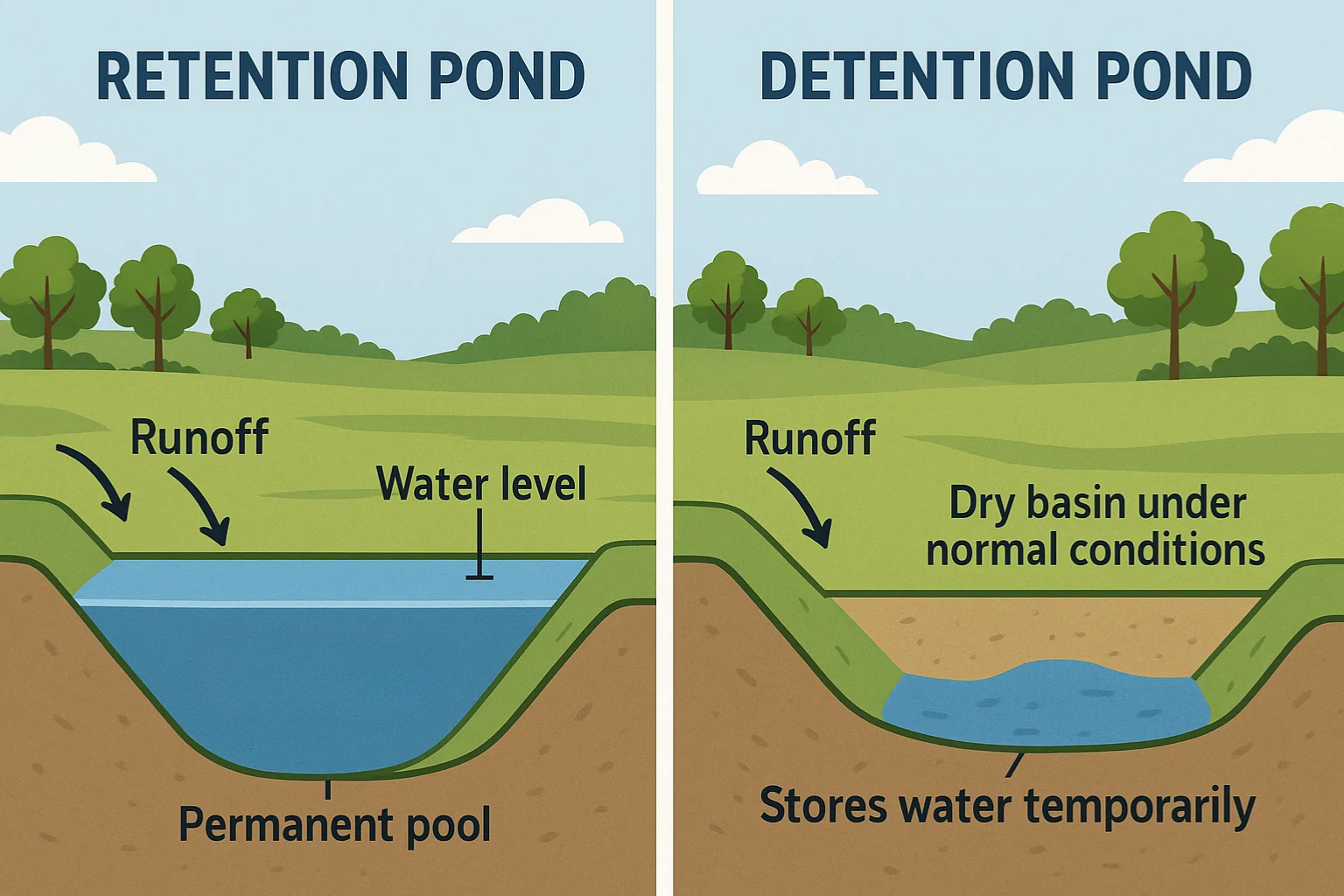
A retention pond collects stormwater runoff from roofs, parking lots, and roads. Instead of letting water rush into storm drains, the pond holds it and releases it slowly.
Here is how it works in simple terms:
Rainwater flows into the pond
The pond stores the water
Dirt and debris settle at the bottom
Cleaned water drains out through a controlled outlet
If the pond fills with trash, sediment, or thick weeds, this process slows down or stops. That is when flooding and erosion start.
What You Can Safely Do Yourself vs What Needs a Professional
Before starting DIY work, it is important to know your limits.
Safe DIY Tasks
Visual inspections
Trash and debris removal
Light vegetation control
Mowing pond banks
Checking inlet and outlet structures
Monitoring water levels
Tasks for Professionals
Dredging sediment
Repairing pond liners
Structural repairs to dams or spillways
Chemical water treatments
Major erosion control
DIY maintenance focuses on prevention and monitoring. These actions alone can reduce professional service needs and lower total costs.
DIY Tip 1: Regular Visual Inspections Catch Problems Early
A quick inspection once or twice a month can save thousands of dollars. Small cracks, clogged pipes, or early erosion are easier and cheaper to fix when caught early.
What to Look For
Walk around the pond and check:
Standing water that does not drain after 48 hours
Trash or floating debris
Blocked inlets or outlets
Bare soil or eroded slopes
Overgrown plants near drainage areas
Unusual odors or algae buildup
How This Saves Money
Finding problems early avoids emergency repairs. Emergency work often costs 2 to 3 times more than planned maintenance.
DIY Tip 2: Control Vegetation the Right Way
Plants help stabilize soil, but too much growth blocks water flow and damages structures. In Atlanta’s warm climate, vegetation grows fast, especially from late spring to early fall.
What to Trim and What to Leave
Trim tall grass on pond banks
Remove woody plants near pipes and outlets
Leave native grasses that prevent erosion
Do not remove all plants from the water's edge
Tools You Can Use
String trimmer
Push mower for gentle slopes
Hand tools for spot removal
Avoid heavy equipment unless trained. Improper mowing can damage the pond’s shape.
Cost Benefit
Proper vegetation control reduces erosion repairs and prevents root damage to pipes, saving long-term repair costs.
DIY Tip 3: Remove Trash and Debris After Storms
After heavy rain, trash, branches, and leaves collect in retention ponds. This blocks water flow and increases flooding risk.
Simple Cleanup Routine
Inspect after major storms
Remove floating trash with a rake or net
Clear leaves from grates and pipes
Dispose of debris properly
How Often to Do It
In Atlanta, check after every major storm, especially during the fall when leaves are heavy.
Savings Impact
Keeping outlets clear prevents water backup, reducing the risk of erosion and structural damage.
DIY Tip 4: Keep Inlets and Outlets Clear
What Are Inlets and Outlets
Inlets bring water into the pond
Outlets release water at a controlled rate
If either gets blocked, the pond stops working.
How to Maintain Them
Remove leaves, mud, and trash
Check for rust or cracks
Make sure water flows freely
Signs of Trouble
Water pooling upstream
Slow drainage
Soil washing away near pipes
Cost Control Advantage
Clear drainage structures reduce pressure on the pond and avoid expensive pipe replacements.
DIY Tip 5: Prevent Erosion Before It Gets Worse
Erosion occurs when water moves too fast over bare soil. Atlanta’s clay soil can wash away quickly during storms.
Simple Prevention Steps
Reseed bare areas with grass
Add mulch to exposed soil
Use erosion control mats on slopes
Redirect water flow if needed
Why This Matters
Erosion leads to sediment buildup in the pond, which increases dredging frequency.
Long-Term Savings
Preventing erosion reduces sediment removal costs, one of the most expensive pond maintenance tasks.
DIY Tip 6: Monitor Sediment Levels Over Time
Sediment is dirt that settles at the bottom of the pond. Over time, it reduces water capacity.
How to Track It
Mark the normal water depth
Take photos yearly from the same spot
Watch for plants growing where water used to be
When to Call a Professional
If sediment reduces depth by more than 20 percent, professional dredging may be needed.
Cost Savings Angle
Monitoring helps you plan dredging instead of reacting to flooding emergencies.
DIY Tip 7: Reduce Mosquito Breeding Naturally
Why Mosquitoes Love Poorly Maintained Ponds
Still water and thick vegetation create ideal breeding conditions.
What You Can Do
Keep water moving
Remove debris
Avoid overgrowth
Encourage natural predators like birds
Avoid chemical treatments unless advised by professionals.
Why This is Important
Reducing mosquitoes improves safety and avoids complaints or health concerns.
Atlanta-Specific Considerations for Retention Pond Maintenance
1. Local Rain Patterns
Atlanta sees sudden heavy rainfall. Ponds must handle fast water flow without overflowing.
2. Soil Type
Clay soil increases erosion risk. Vegetation and slope care matter more here than in sandy regions.
3. Local Rules
Many Georgia counties require retention ponds to meet stormwater standards. Poor maintenance can lead to citations.
DIY care helps you stay ahead of inspections.
Retention Pond Maintenance: Common Questions Property Owners Ask
1. How often should a retention pond be maintained?
Basic inspections should happen monthly. Cleanup and vegetation control should follow major storms. Professional inspections are usually needed once a year.
2. Can homeowners maintain a retention pond themselves?
Homeowners and property managers can handle inspections, debris removal, and light vegetation work. Structural repairs and dredging require professionals.
3. What happens if a retention pond is not maintained?
Neglect can cause flooding, erosion, mosquito problems, and legal issues. Repairs become more expensive over time.
4. How much does retention pond maintenance cost in Atlanta?
Costs vary, but proactive DIY care can reduce annual expenses by up to 30 percent by avoiding emergency work.
5. Are retention ponds required in Georgia?
Yes, many developments require retention ponds as part of Georgia’s stormwater management regulations.
Key Takeaways
Retention ponds protect property and waterways
Atlanta’s climate requires frequent monitoring
DIY inspections prevent major problems
Vegetation control reduces erosion and damage
Clean inlets and outlets keep water flowing
Early action saves money and avoids emergencies
Professional help is still needed for major work
One Last Thing to Keep in Mind
Retention pond maintenance does not have to drain your budget. By handling basic DIY tasks like inspections, debris removal, and vegetation control, you can prevent costly repairs and extend the life of your pond. These steps are simple, safe, and effective when done consistently.
Start by setting a monthly inspection routine. After each major storm, walk around the pond and clear debris. Keep records with photos and notes. This habit alone can reduce maintenance costs by up to 30 percent over time.
For anything beyond basic care, work with a local Atlanta retention pond professional. DIY maintenance works best when paired with expert support. Taking action now protects your property, saves money, and keeps your retention pond working the way it should.

Write a comment ...