
If you live in Atlanta and your property has a retention pond, this blog is written for you. Retention ponds are not just water features. They are working systems that protect neighborhoods from flooding, reduce pollution, and help meet local stormwater rules.
When they are ignored, they create problems like flooding, bad smells, mosquito outbreaks, and even fines from the city or county.
This guide explains retention pond maintenance in very simple terms. Think of it like a routine home maintenance checklist, but for a pond.
You will know what to check, when to check it, who is responsible, and what happens if maintenance is skipped. Everything here is based on how retention ponds actually work in Atlanta, Georgia, not guesses or theory.
If you need professional help to maintain your retention pond in Atlanta, contact Aquatic Restoration at 770-592-5099 or 678-949-3973. We are open from 7 am to 9 pm daily.
What Is a Retention Pond and Why Atlanta Needs Them
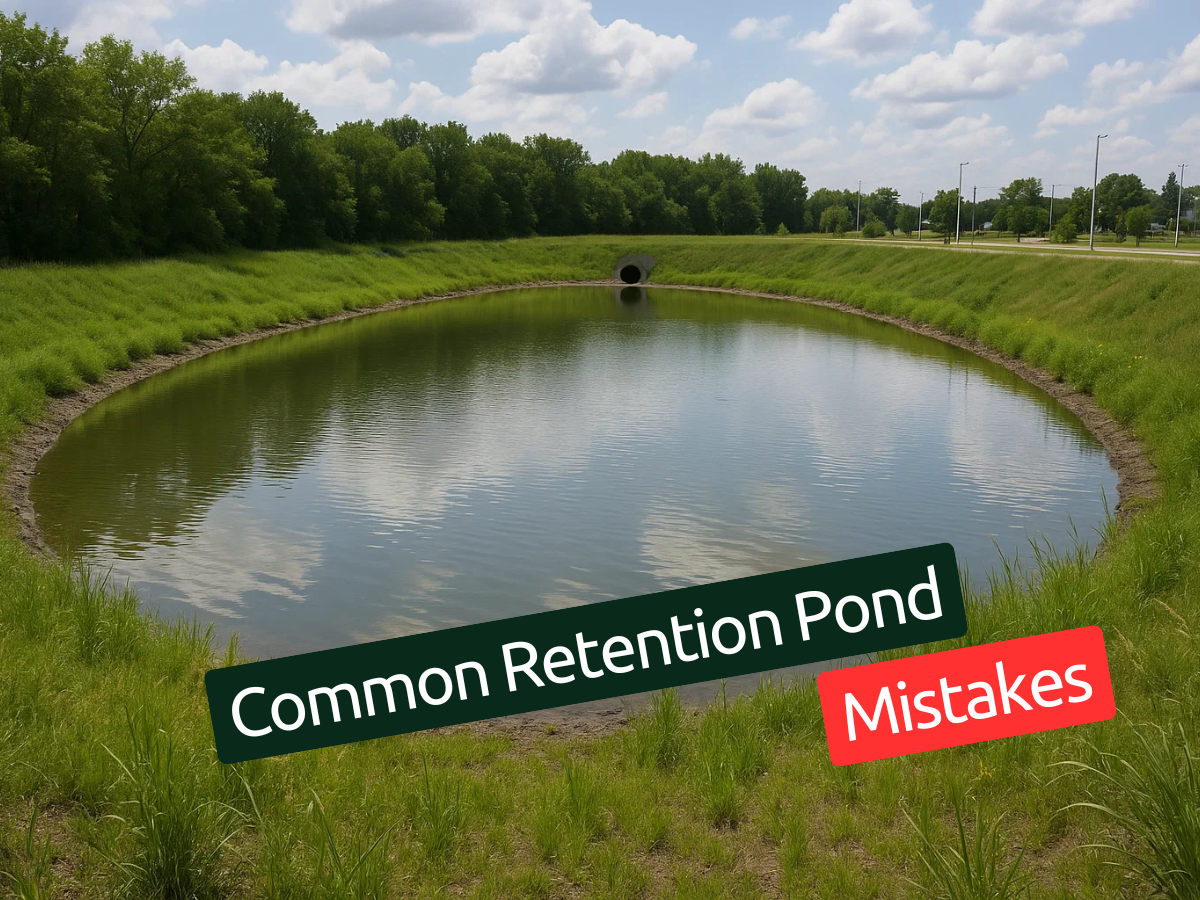
A retention pond is a man-made basin designed to hold stormwater permanently. After heavy rain, water flows into the pond and stays there instead of rushing into the streets or homes. When the water movement slows, dirt, oil, trash, and chemicals sink and stay at the bottom.
Why retention ponds are important in Atlanta
Atlanta gets heavy rainfall throughout the year. The region also has a lot of hills, clay soil, and paved surfaces like roads, parking lots, and rooftops. These conditions make flooding more likely.
Retention ponds help Atlanta by:
Reducing flooding during heavy rain
Protecting nearby streams and rivers like the Chattahoochee
Trapping sediment and pollutants
Meeting city and county stormwater rules
Without proper care, these ponds stop doing their job.
Retention Pond vs Detention Pond - Simple Explanation
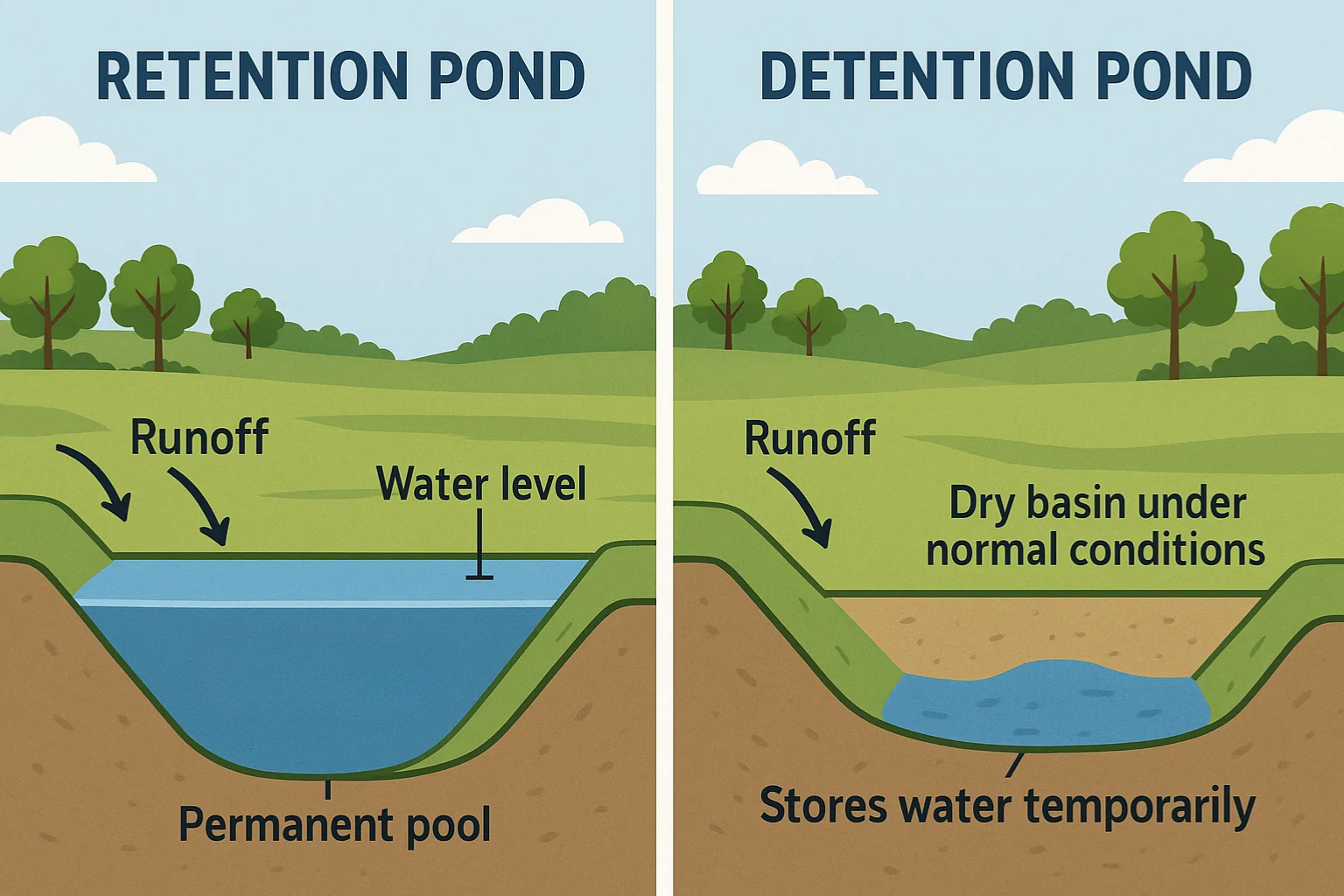
People often confuse retention ponds and detention ponds. The difference matters for maintenance.
Retention pond
Always holds water
Looks like a small lake or pond
Needs water quality and shoreline care
Detention pond
Usually dry
Only holds water during storms
Focuses more on drainage and erosion control
This blog focuses on retention ponds only.
Who Is Responsible for Retention Pond Maintenance in Atlanta
Responsibility depends on ownership.
Common owners
Homeowners associations
Apartment complexes
Shopping centers
Office parks
Industrial properties
Developers until turnover
In Atlanta and surrounding counties like Fulton, DeKalb, Cobb, and Gwinnett, owners are legally responsible for keeping retention ponds functional. Local governments inspect ponds and can issue violations if maintenance is poor.
Ignoring maintenance can lead to:
City notices
Fines
Forced repairs
Liability if flooding causes damage
How Often Should Retention Ponds Be Maintained in Atlanta
Atlanta's weather and vegetation grow fast, so ponds need regular attention.
General maintenance schedule
Monthly visual checks
After every major storm
Seasonal maintenance is performed four times per year
Professional inspection once per year
Sediment removal every 5 to 10 years, depending on conditions
Skipping inspections is one of the biggest reasons ponds fail.
Quick Retention Pond Maintenance Checklist for Atlanta
This is the core checklist. Each item is explained in detail below.
Check water level and clarity
Inspect inlet and outlet structures
Remove trash and debris
Control erosion on banks
Manage vegetation properly
Control mosquitoes and algae
Check safety features
Monitor sediment buildup
Keep records and photos
1. Check Water Level and Water Quality
What normal water should look like
A healthy retention pond should:
Have a stable water level
Look mostly clear or slightly murky
Has no strong odor
Warning signs
Water level too high or too low
Cloudy water that stays cloudy
Green surface scum
Rotten egg smell
These signs can point to drainage problems, pollution, or nutrient overload.
Why this matters in Atlanta
Heavy rain combined with clay soil can clog outlets quickly. If water cannot flow properly, ponds overflow or stagnate.
2. Inspect Inlets and Outlets Carefully
Inlets
Inlets bring stormwater into the pond from pipes or channels.
Check for:
Blocked pipes
Sediment buildup
Collapsed concrete
Trash piles
Outlets
Outlets control how water leaves the pond.
Check for:
Rusted or damaged structures
Blocked orifice plates
Cracked concrete
Signs of water bypassing the structure
Blocked outlets are one of the most common causes of flooding complaints in Atlanta communities.
3. Remove Trash, Debris, and Floating Waste
Retention ponds collect more than water.
Common debris found in Atlanta ponds
Plastic bottles
Food wrappers
Tree branches
Grass clippings
Construction debris
Trash can restrict water flow, invite pests, and result in complaints from nearby residents.
How often should you remove debris
Monthly at a minimum
After storms
Before mosquito season in the spring
4. Control Erosion on Pond Banks
Atlanta soil erodes easily when exposed.
Signs of erosion
Bare soil on slopes
Gullies forming after rain
Slumping banks
Muddy water after storms
Why erosion is serious
Erosion sends sediment into the pond. This reduces storage space and leads to expensive dredging sooner than expected.
Basic erosion control methods
Repair damaged turf
Use erosion control mats
Redirect runoff if needed
Keep heavy equipment off slopes
5. Manage Vegetation the Right Way
Beneficial plants
Healthy ponds need plants. They help filter water and stabilize soil.
Good vegetation includes:
Native grasses
Shoreline plants
Controlled aquatic plants
Problem vegetation
Invasive plants
Overgrown cattails
Trees growing on dams
Woody brush is blocking access
Why tree removal matters
Tree roots can damage embankments and pipes. Trees should not grow on pond dams or near outlet structures.
Vegetation management is about balance, not clearing everything.
6. Mosquito and Algae Control in Atlanta Ponds
Mosquito concerns
Standing water can attract mosquitoes if it is stagnant.
Prevention steps
Keep water moving
Maintain proper depth
Remove debris
Use approved biological treatments when needed
Algae growth
Algae thrives on excess nutrients from fertilizer runoff.
Warning signs:
Green film
Thick surface mats
Strong odors
Proper nutrient control and aeration help reduce algae problems.
7. Inspect Safety Features Around the Pond
Retention ponds can be a safety concern, especially in residential areas.
Safety items to check
Warning signs
Fencing if required
Stable walking paths
Clear sightlines
Loose fencing or hidden drop-offs increase liability risk for property owners.
8. Monitor Sediment Buildup
Sediment is dirt that settles at the bottom over time.
How sediment affects ponds
Reduces water storage
Increases flooding risk
Decreases water quality
Shortens pond lifespan
Signs that sediment removal is needed
The pond appears shallower
Plants growing where water used to be
The outlet is submerged more often
Professional sediment surveys help determine when dredging is required.
9. Keep Maintenance Records and Photos
Documentation protects property owners.
What to record
Inspection dates
Photos before and after work
Repairs completed
Contractor reports
Atlanta inspectors may ask for proof of maintenance. Good records make inspections easier.
Seasonal Retention Pond Maintenance in Atlanta
1. Spring
Remove winter debris
Inspect for erosion
Prepare for mosquito season
2. Summer
Control vegetation growth
Monitor algae
Check water levels after storms
3. Fall
Remove fallen leaves
Inspect outlets before heavy rain
Repair damaged turf
4. Winter
Check for structural damage
Plan major repairs
Review maintenance records
Common Retention Pond Problems in Atlanta and How to Fix Them
1. Flooding near the pond
Often caused by blocked outlets or sediment buildup.
2. Bad odors
Usually linked to algae, stagnant water, or decaying debris.
3. Complaints from residents
Often due to trash, mosquitoes, or overgrown plants.
4. City violations
Usually caused by missed inspections or a lack of documentation.
Early action prevents costly fixes.
FAQs About Retention Pond Maintenance in Atlanta
1. How often should a retention pond be cleaned?
Trash and debris should be removed monthly. Sediment removal usually happens every 5 to 10 years, depending on conditions.
2. Is retention pond maintenance required by law in Atlanta?
Yes. Property owners are responsible for maintaining stormwater facilities according to local ordinances.
3. Can homeowners drain a retention pond?
No. Draining a pond usually requires permits and professional oversight.
4. What happens if a retention pond is not maintained regularly?
The owner may face fines, flooding damage, safety risks, and forced repairs.
5. Who inspects retention ponds in Atlanta?
Local city or county stormwater departments inspect ponds periodically.
Helpful Tips for Choosing a Retention Pond Maintenance Provider
1. Choose a company familiar with Atlanta regulations
Ask for inspection reports and photos
Make sure they handle sediment, vegetation, and structures
Look for long-term maintenance plans, not one-time fixes
Local experience matters because Atlanta's soil, rainfall, and vegetation are unique.
Key Takeaways
1 . Retention ponds protect Atlanta properties from flooding
Maintenance is a legal responsibility, not optional
Monthly checks prevent major problems
Sediment buildup is the most expensive long-term issue
Good records protect property owners during inspections
Early maintenance costs less than emergency repairs
Conclusion - What You Should Do Next
If your property has a retention pond in Atlanta, do not wait for a problem to appear. Most pond failures happen slowly and go unnoticed until flooding or city violations occur. Start with a simple visual inspection this week. Walk the pond, look at the water, check the outlets, and take photos.
If you see erosion, standing debris, blocked structures, or heavy plant growth, it is time to act. Schedule a professional inspection and set up a routine maintenance plan that fits Atlanta’s climate and regulations.
A well-maintained retention pond protects your property, reduces liability, and keeps your community safe year-round. Taking care of it now saves money and stress later.
Also, Check our Other Helpful Blogs:
Sediment Buildup Explained: How It Impacts Water Quality and Fish Habitat
Why Do Lakes Turn Green? What Every Homeowner Should Know About Algae Blooms
10 Winter Tips (From Experts) for Retention Ponds in Atlanta
For reliable winter inspections, maintenance planning, or ongoing pond care:
Visit: https://www.aquaticrestoration.net/retention-pond-maintenance-atlanta-ga
Call: 770-592-5099 or 678-949-3973
Website: https://www.aquaticrestoration.net
Contact page: https://www.aquaticrestoration.net/contact
Find us on Google Maps: https://maps.app.goo.gl/HYvUbp4XReUuhjST7
Business Hours: (Monday to Sunday: 7 am to 9 pm)
Written By: Aquatic Restoration
At AquaticRestoration, we’ve been helping Georgia pond and lake owners since 1970. Our services include shoreline stabilization, spillway renovation, siphon installation, lake management, dredging, and retention pond maintenance. We fix problems without harming your land or budget.
Write a comment ...